


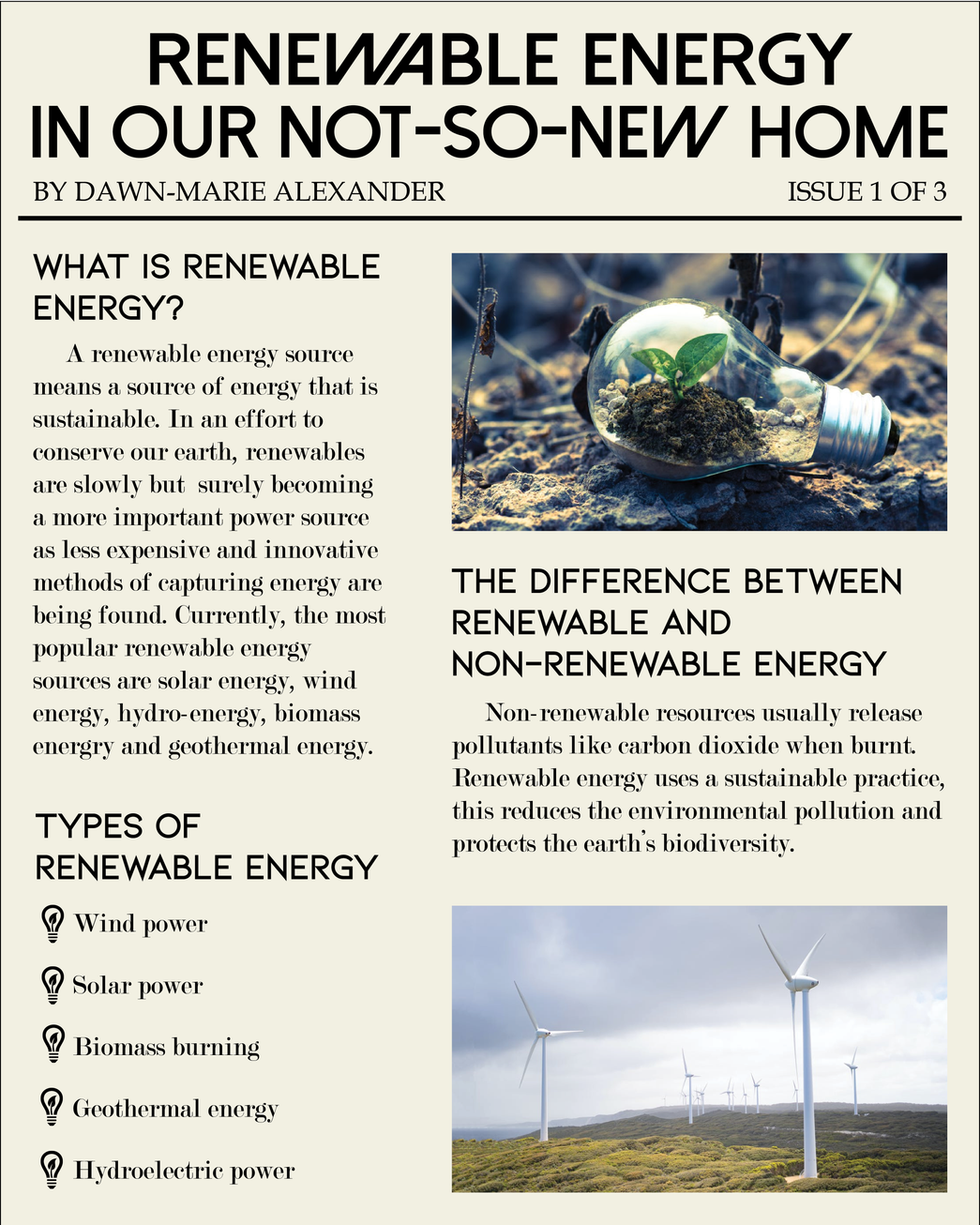
Renewable Energy In Our Not-So-New Home: Part 2
- For Change

- Feb 15, 2022
- 4 min read
Updated: Mar 2, 2022
by: Suemita Teeluck
Benefits of Renewable Energy
In any discussion about climate change, renewable energy usually tops the list of changes the world can implement to fight off the worst effects of rising temperatures. That's because renewable energy sources such as solar and wind don't emit carbon dioxide and other greenhouse gases that contribute to global warming. Clean energy has far more benefits than just being "green."
Environmental and economic benefits of using renewable energy include:
Less global warming
Human activity is overloading our atmosphere with carbon dioxide and other global warming emissions. These gases act like a blanket, trapping heat. The result is a web of significant and harmful impacts, from stronger, more frequent storms, to drought, sea-level rise, and extinction.
In contrast, most renewable energy sources produce little to no global warming emissions. Even when including “life cycle” emissions of clean energy (i.e., the emissions from each stage of a technology’s life—manufacturing, installation, operation, decommissioning), the global warming emissions associated with renewable energy are minimal.
Improved public health
The air and water pollution emitted by coal and natural gas plants are linked with breathing problems, neurological damage, heart attacks, cancer, premature death, and a host of other serious problems. Pollution affects everyone. Most of these negative health impacts come from air and water pollution that clean energy technologies simply don’t produce. Wind, solar, and hydroelectric systems generate electricity with no associated air pollution emissions. Geothermal and biomass systems emit some air pollutants, though total air emissions are generally much lower than those of coal- and natural gas-fired power plants.
In addition, wind and solar energy require essentially no water to operate and thus do not pollute water resources or strain supplies by competing with agriculture, drinking water, or other important water needs. In contrast, fossil fuels can have a significant impact on water resources: both coal mining and natural gas drilling can pollute sources of drinking water, and all thermal power plants, including those powered by coal, gas, and oil, withdraw and consume water for cooling.
Biomass and geothermal power plants, like coal- and natural gas-fired power plants, may require water for cooling. Hydroelectric power plants can disrupt river ecosystems both upstream and downstream from the dam.
Inexhaustible energy
Strong winds, sunny skies, abundant plant matter, heat from the earth, and fast-moving water can each provide a vast and constantly replenished supply of energy. Renewable energy is virtually inexhaustible. This means that any energy source deemed “renewable” cannot ever be used up or depleted. It is renewed frequently (within the average human lifespan) and naturally.
Jobs and other economic benefits
Compared with fossil fuel technologies, which are typically mechanized and capital intensive, the renewable energy industry is more labor-intensive. Solar panels need humans to install them; wind farms need technicians for maintenance.
This means that, on average, more jobs are created for each unit of electricity generated from renewable sources than from fossil fuels.
Stable energy prices
Renewable energy is providing affordable electricity across the country right now and can help stabilize energy prices in the future.
Although renewable facilities require upfront investments to build, they can then operate at a very low cost (for most clean energy technologies, the “fuel” is free). As a result, renewable energy prices can be very stable over time.
In contrast, fossil fuel prices can vary dramatically and are prone to substantial price swings.
Using more renewable energy can lower the prices of and demand for natural gas and coal by increasing competition and diversifying our energy supplies. And an increased reliance on renewable energy can help protect consumers when fossil fuel prices spike.
Reliability and resilience
Wind and solar energy are less prone to large-scale failure because they are distributed and modular. Distributed systems are spread out over a large geographical area, so a severe weather event in one location will not cut off power to an entire region. Modular systems are composed of numerous individual wind turbines or solar arrays. Even if some of the equipment in the system is damaged, the rest can typically continue to operate.
Water scarcity is another risk for non-renewable power plants. Coal, nuclear, and many natural gas plants depend on having sufficient water for cooling, which means that severe droughts and heatwaves can put electricity generation at risk. Wind and solar photovoltaic systems do not require water to generate electricity and can operate reliably in conditions that may otherwise require closing a fossil fuel-powered plant.
The risk of disruptive events will also increase in the future as droughts, heatwaves, more intense storms, and increasingly severe wildfires become more frequent due to global warming. Thus, increasing the need for resilient, clean technologies.
There are many cities in the world that already source one hundred percent of their electricity from renewable energy. Now, they are taking steps to expand their ambitions to get rid of fossil fuels in heating, cooling, transport, and industry. Even without climate change, fossil fuels are a finite resource, and if we want our lease on the planet to be renewed, our energy will have to be renewable. It’s time for us to follow in their footsteps and fight to save our planet.



References:
Benefits of renewable energy use. Union of Concerned Scientists. (n.d.). Retrieved December 17, 2021, from https://www.ucsusa.org/resources/benefits-renewable-energy-use
Nunez, C. (2021, May 3). Renewable energy, facts and information. Environment. Retrieved December 17, 2021, from https://www.nationalgeographic.com/environment/article/renewable-energy
Why is renewable energy important? REN21. (2021, October 27). Retrieved December 17, 2021, from https://www.ren21.net/why-is-renewable-energy-important/
Ygrene. (n.d.). Retrieved December 17, 2021, from https://ygrene.com/blog/renewable-energy/inexhaustible-guide-renewable-energy


Comments